
Manaslu Circuit Trek
Complete Guide 2026
Nepal’s most dramatic off-the-beaten-path Manaslu Circuit Trek — permits, costs, itinerary, and 60 expert answers to every question trekkers ask.
Manaslu Circuit Trek at a Glance
Manaslu Circuit Trek Overview
A remote, less-crowded Himalayan adventure in Nepal’s Gorkha district
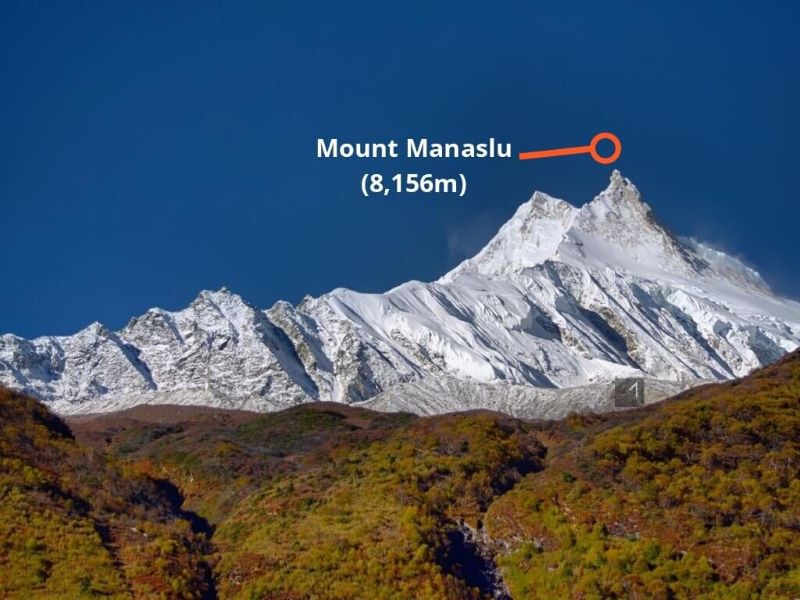
The Manaslu Circuit Trek circles Mount Manaslu (8,163 m) — the world’s 8th-highest mountain — in Nepal’s Gorkha district. Unlike busier routes like Everest Base Camp, the Manaslu Circuit offers authentic villages, ancient trade paths, dramatic gorges, pine forests, and glaciers with far fewer trekkers on the trail.
The trek crosses the challenging Larkya La Pass (5,160 m) and winds through the stunning Tsum Valley, where Nubri and Tsum communities preserve a Tibetan Buddhist culture that has changed little for centuries.
Most Manaslu Circuit trek itineraries take 14–18 days, with many combining the Tsum Valley for a 20–24 day journey. The route typically starts in Soti Khola, reached by a 7–8 hour drive from Kathmandu via Arughat, and can connect onward to the Annapurna Circuit via Dharapani. This trek is ideal for adventurous hikers who want high-altitude drama, deep culture, and quieter trails on a world-class circuit.
- Spring (Mar–May) — Rhododendron blooms, mild temperatures
- Autumn (Sep–Nov) — Clear mountain views, stable weather
Kathmandu → Arughat → Soti Khola → Machha Khola → Jagat → Deng → Namrung → Samagaon → Samdo → Dharamsala → Larkya La Pass (5,160 m) → Bimthang → Dharapani → Besisahar → Kathmandu
Manaslu Circuit Trek — Standard 14–16 Day Itinerary
Day-by-day breakdown of the classic route
-
DAY 1
Kathmandu to Soti Khola (710m)
Drive 7–8 hours via Arughat through rolling hills and river valleys. Settle into a simple guesthouse in Soti Khola.
-
DAY 2
Soti Khola to Machha Khola (869m)
Trek through bamboo forests, deep river gorges, and across wooden suspension bridges. About 5–6 hours on shaded forest trails.
-
DAY 3
Machha Khola to Jagat (1,340m)
Cross the Budhi Gandaki river several times, pass small villages and waterfalls, and start noticing Tibetan cultural influences.
-
DAY 4
Jagat to Deng (1,860m)
Pass the restricted-area checkpoint, trek through narrow gorges, and reach Deng — your first truly Tibetan-style village.
-
DAY 5
Deng to Namrung (2,630m)
Climb through pine and rhododendron forests. First clear views of the Manaslu massif appear, along with mani walls and prayer flags.
-
DAY 6
Namrung to Samagaon (3,520m)
Enter the high Tibetan plateau. Visit Pungyen Gompa and settle in Samagaon, the largest village on the route, with fantastic views of Manaslu.
-
DAY 7
Acclimatization Day at Samagaon
Rest and acclimatize. Optional hikes to Manaslu Base Camp (4,800m) or Birendra Lake help your body adjust before the high pass.
-
DAY 8
Samagaon to Samdo (3,875m)
A short but steady climb gaining altitude. Samdo is a former Tibetan trade village near the border; visit its quiet monastery.
-
DAY 9
Samdo to Dharamsala / Larkya Base Camp (4,460m)
Clamber up to the high camp before the pass. Sleep early — you’ll need a 3 am start for Larkya La Pass day.
-
DAY 10
🏔️ Dharamsala over Larkya La Pass (5,160m) to Bimthang (3,720m)
The trek’s highlight. Start at 3–4 am and spend 8–9 hours crossing Larkya La Pass, with sweeping 360° views of Manaslu, Himlung, and Cheo Himal. Then descend steeply to Bimthang.
-
DAY 11
Bimthang to Tilije (2,300m)
Descend through dramatic alpine scenery, passing apple orchards and waterfalls. The big altitude loss helps your body recover.
-
DAY 12
Tilije to Dharapani (1,963m)
Trek through Koto and arrive in Dharapani, where this route meets the Annapurna Circuit Trek. You can continue onto Annapurna from here.
-
DAY 13
Dharapani to Besisahar — Drive to Kathmandu
Short drive to Besisahar, then a longer 6–7 hour drive back to Kathmandu. Your trek is complete.
Manaslu Circuit Trek — Permits, Fees & Budget 2026
Everything you’ll need to pay for your trek in 2026
Manaslu passes through a restricted area, so a licensed guide is mandatory for every trekker. You’ll need the Manaslu Conservation Area Permit (MCAP), plus ACAP and RAP. Prices below are 2026 estimates and may change slightly depending on season, group size, and operator. Budget packages cover basic teahouses and shared transport, while mid-range and premium options include better lodging, more meals, and additional support.
📋 Required Permits
$75/week first 7 days (Dec–Aug), then $10/day
💰 Budget Breakdown
🎒 Package Cost (All-inclusive)
Manaslu Circuit Trek — Difficulty Breakdown
Physical demands and challenge rating for the Manaslu Circuit Trek
The Manaslu Circuit Trek is challenging but achievable for determined first-timers with proper preparation. High altitude, steep passes, and remote terrain require good fitness and careful acclimatization. Many first-time trekkers succeed with 3–4 months of training, a licensed guide, and strict adherence to rest days. Prior high-altitude experience (3,500m+) helps but is not mandatory if you train well and listen to your body.
Best Time for Manaslu Circuit Trek
Seasonal conditions and weather patterns for the Manaslu Circuit Trek throughout the year
September–November
Clear skies, stable weather, comfortable temperatures. Peak season for the Manaslu Circuit Trek with excellent visibility on Larkya La Pass.
March–May
Spring blooms, rhododendrons in flower, excellent visibility. Slightly warmer than autumn. Mountain views on the Manaslu Circuit Trek are stunning.
December–February
Cold, heavy snow at altitude, icy passes. Only for experienced winter trekkers. Shorter daylight hours complicate Larkya La Pass crossing.
June–August
Monsoon rains, landslides, poor visibility. Most guesthouses on the Manaslu Circuit Trek close. Trails become dangerous and impassable.
Manaslu Circuit Trek — Essential Gear Checklist
What to pack for the Manaslu Circuit Trek — altitude and weather demands
🎒 Backpack & Luggage
- 60–70L trekking backpack
- Day pack (20–30L)
- Trekking duffle bag (for porter)
- Compression sacks
- Waterproof pack covers
👕 Clothing
- Thermal base layers (2 sets)
- Fleece or wool mid-layer
- Down jacket (essential for Manaslu Circuit Trek)
- Waterproof rain jacket & pants
- Hiking pants (2 pairs)
- Hiking shirts (3–4)
- Warm hat & sun hat
- Gloves & mittens
- Thick wool socks (6 pairs)
👟 Footwear
- Waterproof hiking boots
- Gaiters (prevent snow entry on Larkya La Pass)
- Lightweight camp shoes
- Wool socks (multiple pairs)
🛏️ Sleep & Camp Gear
- Sleeping bag (-15°C rating)
- Sleeping pad / foam mat
- Pillow or stuff sack
💊 Health & Toiletries
- Altitude sickness medication (Diamox)
- First aid kit
- Blister treatment
- Pain relievers & antacids
- Anti-diarrhea medication
- Sunscreen & lip balm
- Toothbrush & toothpaste
- Wet wipes
- Personal medications
📱 Electronics & Documents
- Passport & travel insurance
- Manaslu Circuit Trek permit photocopies
- Phone & portable charger
- Camera (optional)
- Headlamp or flashlight
- Extra batteries
🍽️ Miscellaneous
- Trekking poles
- Water bottle or hydration pack
- Snacks & energy bars
- Water purification tablets
- Multi-tool or knife
- Duct tape & cord
- Maps or GPS device
🧘 Optional Comfort Items
- Merino wool base layer
- Thermal gloves
- Neck gaiter / balaclava
- Earplugs
- Reading material
- Notebook & pen
Manaslu Circuit Trek — Tips & Practical Advice
Expert tips to make your Manaslu Circuit Trek safer and more enjoyable
Hydrate Constantly
Drink 3–4 liters of water daily at altitude. Dehydration worsens altitude sickness. Add electrolyte powder to water. Avoid excessive caffeine and alcohol. Tea houses charge a fee for hot water (ranging from NPR 150–400 depending on altitude).
Break In Your Boots
Wear trekking boots for 2–3 weeks before the Manaslu Circuit Trek to avoid blisters. Bring moleskin tape and blister treatment. Gaiters prevent snow from entering boots at high altitude. Consider merino wool socks for comfort.
Start Early on Pass Day
Larkya La Pass crossing requires a 3–4am start from base camp. Weather deteriorates by noon. An early start gives 8–10 hours for the 8–9 hour climb, with buffer time. No rushing = safer crossing.
Bring a Guide You Trust
Your guide makes or breaks the Manaslu Circuit Trek experience. Choose one with Manaslu experience (not just Everest). Ask about their altitude experience, acclimatization protocols, and emergency training. Good guides earn $30–$40/day — worth the investment.
Don’t Rush Acclimatization
Spend 2 full days at 3,500m+ before attempting Larkya La. “Climb high, sleep low” is the golden rule. Rest days at Samagaon and Samdo prevent HAPE and HACE. Faster isn’t better — safe is best.
Consider Diamox
Consult a doctor about acetazolamide (Diamox) for altitude sickness prevention. Start 2–3 days before reaching 3,000m. Take 250mg twice daily. Common side effects: tingling, altered taste. Prevents 50% of acute mountain sickness.
Go Slow (Pole Pole)
Trek speed at altitude: 2–3 km/hour is normal. Don’t compete with other trekkers. Pace yourself like a mountain race, not a sprint. Your guide will set the pace — trust them. Steady breathing, steady pace.
Plan Communication
NTC SIM cards work in most Manaslu Circuit Trek villages but have unreliable signal. Download offline maps of the route. Bring a power bank — USB charging available at some guesthouses. Emergency contacts with your guide and embassy.
Pack Light
Backpack weight: 8–10kg max for high altitude (without porter). Less weight = faster ascent and fewer injuries. Weigh your gear before leaving Kathmandu. Cut items you haven’t used by day 2 — eliminate non-essentials.
Bring Warm Layers
Nights at 3,500m+ on the Manaslu Circuit Trek drop to -5 to -10°C. A quality down jacket is non-negotiable. Merino wool base layers regulate temperature. Thermal leggings, thick gloves, and a balaclava are survival gear. Don’t cheap out on insulation.
Respect Local Culture
Samagaon and Samdo are Tibetan Buddhist communities. Remove shoes before entering gompas. Don’t touch mani walls or prayer flags. Greet locals with “Namaste.” Hire local porters/guides — tourism money supports the community.
Travel Insurance is Essential
Buy comprehensive travel insurance covering altitude sickness, evacuation, and cancellation. Manaslu Circuit Trek is remote — helicopter rescue costs $5,000–$15,000. Insurance must cover “high altitude” (above 3,500m). Check policy limits before departure.
Manaslu Circuit Trek — Solo Trekking 2026 Legal Update
Recent regulation changes for independent travelers
✓ Solo trekking with a licensed guide is now permitted
As of 2026, trekking as an individual is legally possible — but with important conditions. The requirement to find a second trekker or join a group to obtain a Restricted Area Permit (RAP) has been lifted. Solo travel without a guide remains strictly prohibited by the Nepal government.
Manaslu Circuit Trek — Frequently Asked Questions
60+ expert answers to common questions trekkers ask
-
Is the Manaslu Circuit Trek harder than Everest Base Camp?▼
“Yes. EBC is a steady uphill walk to 5,364m with teahouses every hour. Manaslu crosses Larkya La Pass at 5,106m — lower in elevation but technically harder with remote terrain and longer days between villages. EBC’s Kala Patthar viewpoint hits 5,545m, but that’s a side hike, not the main trail.
-
How does Manaslu compare to Annapurna Circuit?▼
Both reach 5,000m+. Annapurna has Thorong La at 5,416m — slightly higher but on a well-established trail. Manaslu’s Larkya La at 5,106m is more remote and technically demanding. The difference is infrastructure and crowds, not altitude.
-
Is Manaslu suitable for first-time trekkers?▼
Yes, but prepare seriously. See the difficulty breakdown above. Train 3–4 months, hire a guide, and take rest days. Many first-timers complete it — determination and preparation matter more than prior experience.
-
What’s the fitness requirement?▼
Excellent aerobic fitness is essential. You should be able to walk 5–7 hours uphill daily at altitude. Train 3–4 months before: hill repeats, stair climbing, long hikes (6–8 hours), and gym work. At altitude, fitness drops 20–30%, so train harder than the trek demands.
-
Can I trek completely independently without a guide?▼
No. A licensed guide is mandatory for Manaslu. You cannot obtain permits (RAP, MCAP, ACAP) without booking through a registered trekking agency. The 2026 rule change only removed the minimum group size requirement — solo foreigners can now trek with just one guide, instead of needing to join a group.
-
How do I hire a licensed guide?▼
Hire through: (1) reputable trekking companies in Kathmandu, (2) online tour operators, or (3) direct contact with guide associations. Licensed guides carry official certificates from the Nepal Trekking Guide Association. Cost: $30–$40/day. Guides should provide travel insurance, first aid training, and communication devices.
-
What language do guides speak?▼
Most guides speak Nepali, English, and limited Tibetan. Many speak German, French, or Spanish. If you need a specific language, request it when booking. English-speaking guides are standard. International language skills add $5–$10/day.
-
Can I trek with a female guide?▼
Yes. Female guides are available, though fewer than male guides. They are fully licensed and equally qualified. If you prefer a female guide, request specifically when booking. There is no additional cost — it depends on operator availability.
-
What’s the best season?▼
September–November (autumn) and March–May (spring) are ideal. Autumn: clear skies, cool temps, stable weather, best visibility. Spring: rhododendron blooms, slightly warmer, stunning mountain views. Avoid: June–August (monsoon), December–February (heavy snow).
-
Can I trek in winter (December–February)?▼
Only if you’re an experienced winter mountaineer. Winter means: heavy snow (2–5 feet at pass), avalanche risk, -20°C nights, ice on Larkya La. The pass becomes a technical climb, not a hike. Most teahouses close. Not recommended for standard trekkers.
-
What if I trek during monsoon (June–August)?▼
High risk. Monsoon brings daily rain, landslides, trail erosion, and poor visibility. Most guesthouses close (limited food/shelter). Larkya La is frequently impassable (80% closure rate). Altitude sickness worsens with clouds and moisture. Skip these months entirely.
-
What’s the weather like on Larkya La Pass?▼
Variable and extreme. In autumn/spring: -5°C to +5°C, winds 30–50 km/h, possible snow. In winter: -15°C to -25°C, whiteout conditions, 80+ km/h winds. Weather changes in 30 minutes. Start very early (3–4am) to cross before afternoon weather deteriorates.
-
How much altitude sickness should I expect?▼
Most (70%) experience mild symptoms: headache, fatigue, sleep disruption, nausea at 3,500m+. Severe symptoms (HACE, HAPE) are rare with proper acclimatization. Prevention: acclimatization days at Samagaon (3,520m) and Samdo (3,875m). Slow ascent saves lives.
-
Should I take Diamox?▼
Yes, if you have prior altitude sickness or ascend fast. Standard dose: 125–250mg twice daily, starting 24 hours before ascending. Diamox reduces AMS risk by 40–50%. Consult a doctor before use. Best practice: Diamox + acclimatization + hydration.
-
What are signs of serious altitude sickness?▼
Red flags: severe headache, vomiting, extreme fatigue, confusion, ataxia (loss of balance), rapid breathing, gurgling sounds in lungs. These indicate HACE or HAPE — life-threatening. Immediate action: descend at least 500m, get oxygen, seek medical help. Do not continue ascending.
-
What permits do I need?▼
Three permits are required:
- MCAP (Manaslu Conservation Area Permit) — NPR 3,000 (~$25)
- ACAP (Annapurna Conservation Area Permit) — NPR 3,000 (~$22)
- RAP (Restricted Area Permit) — $100/week for first 7 days (Sep–Nov / Mar–May), then $15/day. $75/week for first 7 days (Dec–Aug), then $10/day
Total: ~$150–$250. No printed photograph needed — uploaded online and printed on the permit itself. Guides arrange permits; processing takes 2–3 days in Kathmandu.
Where do I get permits?▼You cannot obtain Manaslu permits independently — a licensed trekking agency is mandatory. Your agency handles all permits (MCAP, ACAP, RAP) as part of your package. Processing takes 2–3 working days in Kathmandu. Book with your agency at least 5–7 days before departure to allow permit processing time.
Can I share a guide to save money?▼Yes! Group treks share guide costs. A guide costs $30–$40/day total, so 4 people pay $7–$10/day each. However, permits (MCAP, ACAP) are per-person and non-shareable. Group packages typically cost $1,200–$1,600/person all-in.
Do I need travel insurance?▼Yes, absolutely. Get travel insurance covering: high-altitude trekking (3,500m+), rescue/evacuation (helicopter cost: $3,000–$5,000), medical evacuation, trip cancellation. Check that Manaslu is specifically covered — some insurers exclude it. Cost: $60–$200 for 2 weeks.
How much does the trek cost?▼$1,200–$2,500 all-inclusive per person. Breakdown: Permits ($150–$250), guide ($30–$40/day × 14 = $420–$560), accommodation ($5–$15/night), meals ($20–$35/day), transport ($30–$60), porter optional ($20–$25/day). Group packages: $1,400–$2,000 typical.
What’s included in a trek package?▼Standard packages include: guide, teahouse accommodation, meals on trek, permits, transport to/from Soti Khola, 24/7 support. Premium packages ($2,000+) add luxury guesthouses, fewer trekkers, extra rest days.
Is it cheaper to book online or in Kathmandu?▼Online booking (2–4 weeks prior): 10–20% discount. On-arrival (Thamel): 20–30% cheaper but quality varies. Best value: book 3–4 weeks ahead with established operator (1,000+ treks, 4.5★+ reviews). Online gives security + discounts. Walk-up = budget option but higher cancellation/safety risk.
Do I need a porter?▼Recommended, not required. Porter carries your main pack (15–25kg), reducing strain and allowing faster ascent. Cost: $20–$25/day. Without porter, pack ultra-light (<8kg). Many trekkers use guide + porter combo — porter handles logistics, guide handles safety.
How do I get to Soti Khola from Kathmandu?▼Drive 7–8 hours by jeep/van from Kathmandu via Arughat to Soti Khola (710m). Cost: $30–$60 shared jeep, or $200–$300 private. Tour operators arrange. Alternative: public bus Kathmandu→Gorkha ($15, 5 hrs), then jeep Gorkha→Soti Khola ($20, 3 hrs).
How do I get back from Dharapani to Kathmandu?▼Three options: (1) Jeep/bus to Besisahar (2 hrs, $15–$30), then bus to Kathmandu (6–7 hrs, $20–$30). Total: 8–9 hours, $35–$60. (2) Private jeep direct Dharapani→Kathmandu (6 hrs, $80–$120). (3) Continue Annapurna Circuit.
Can I do Manaslu and Annapurna back-to-back?▼Yes! After Larkya La descent to Dharapani, continue Annapurna Circuit via Besisahar. Total: 18–23 days combined. Advantage: use permits efficiently, experience Nepal’s two best treks. Very demanding — only for experienced trekkers with plenty of time.
What’s the Tsum Valley extension?▼A 6–8 day side trek from Samagaon into remote Tsum Valley — home to Tsum ethnic minority and ancient Tibetan trade routes. Cost: +$50–$100 permits, +6–8 days trek time. Highly recommended for experienced trekkers wanting more culture and remoteness.
Is it safe to trek in 2026?▼Yes. Manaslu is a well-established route with licensed guides, teahouse infrastructure, fixed ropes, and rescue services. Main risks: altitude sickness (manageable), weather (seasonal). Mortality rate: <0.5%. Hire reputable guide, take insurance, acclimatize properly.
What medical support is available?▼Limited on trek. Guides carry oxygen, medication, first aid kits. Serious illness requires helicopter evacuation (2–4 hrs from Samagaon), costs $3,000–$5,000. Evacuation insurance is essential. Nearest hospitals: Gorkha (5 hrs descent), Kathmandu (full day).
What vaccines do I need?▼Consult doctor 6–8 weeks pre-trek. Recommended: Hepatitis A/B, Typhoid, Tetanus/diphtheria, Japanese encephalitis (if rural), Rabies (optional). Medications: Diamox, Ibuprofen, anti-diarrheal, antibiotic cream, electrolyte powder, sunscreen SPF 50+.
What about water safety?▼Giardia and bacterial diarrhea are common (30–50% of trekkers). Prevention: drink boiled water only, use water purification tablets/filter, avoid uncooked vegetables, wash hands before eating. Teahouses provide hot tea (safe). Carry backup water filter.
What’s the food like on the trek?▼Teahouse meals are simple, high-carb: eggs, toast, dal bhat (rice + lentils), noodles, momos. Limited fresh vegetables at high altitude. Carry snacks: chocolate, nuts, dried fruit, energy bars. Many trekkers lose 2–5kg during the trek.
How much cash should I bring?▼Bring $200–$300 USD equivalent. 40–50% in USD, 50–60% in Nepali Rupees. Exchange money in Kathmandu (better rates). ATMs are in Kathmandu only — impossible on the trail. Teahouses accept NPR only.
What about phone signal and internet?▼Expect no signal most days; limited signal at major towns (Soti Khola, Jagat, Samagaon, Samdo). Buy local SIM in Kathmandu ($2, 4–6 GB data). Bring power bank — charging available at some guesthouses (50 NPR per charge).
Is it okay to trek solo as a woman?▼Yes, safe with a guide. Hundreds of solo women trek Manaslu safely annually. Hire reputable operator with women-positive culture. Dress modestly in villages. Bring feminine hygiene supplies (limited in villages). Connect with other women trekkers for group dynamics if preferred.
What’s the environmental impact of trekking?▼Carry out all litter, use minimal water, avoid single-use plastics (bring refillable bottle). MCAP conservation: 20% of permit fees → habitat protection, porter wages, school funding. Choose responsible operators committed to sustainability.