
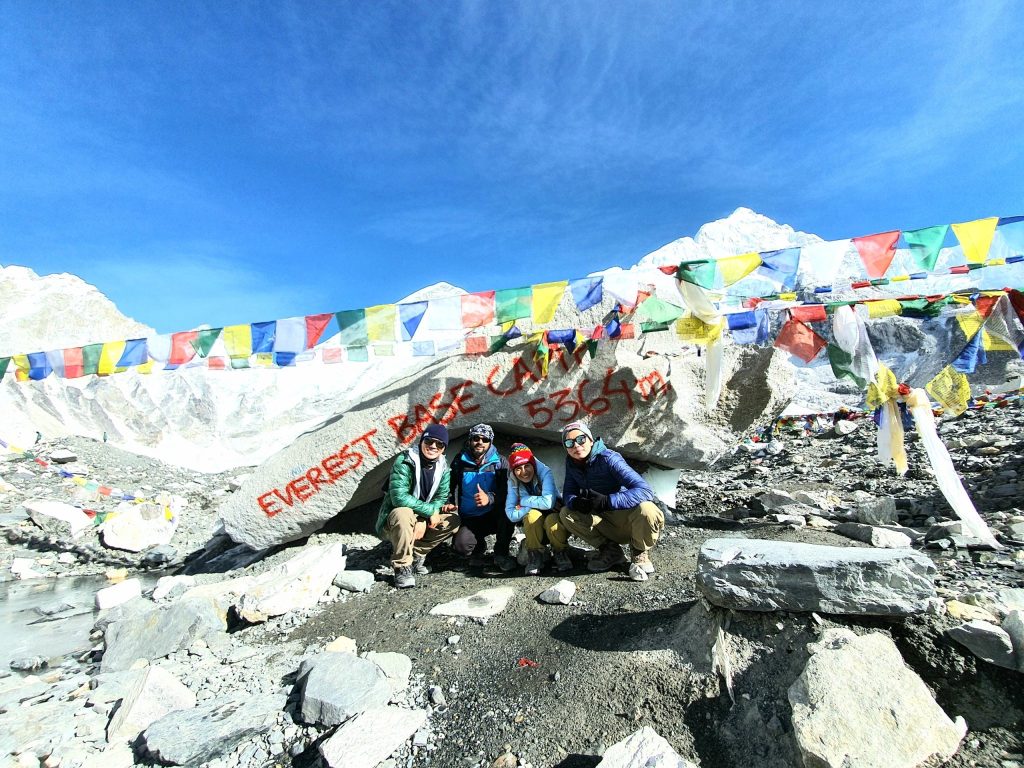
Everest Base Camp Trek Over 50 — Can You Actually Do It?
From a guide who has walked this trail with trekkers of every age. The honest answer, the real challenges, and what you need to prepare.
Yes — trekkers over 50 complete Everest Base Camp every single season. Age is not the limiting factor. Fitness, preparation, and how seriously you take acclimatization are.
I have guided trekkers well into their 50s to Everest Base Camp. Some of them moved more steadily and thoughtfully than people half their age. The ones who struggled were not the oldest in the group — they were the ones who rushed, who ignored early symptoms, or who came underprepared.
EBC is not a technical climb. There are no ropes, no crampons, no vertical faces. What it demands is endurance, patience, and respect for altitude. These are qualities that tend to get better with age, not worse.
That said, the trek does ask something specific from older trekkers that younger ones can often skip: honest preparation for the descent. The knees carry everything down from 5,364 metres. That is where I see the most difficulty — not going up, but coming down.
The oldest trekker I have personally guided to Everest Base Camp was in their 50s — fit, calm, and completely focused. They reached base camp without a single serious altitude issue. What made the difference: they trained for six months, they never rushed, and they listened when I said slow down. That is the whole formula.
The Real Challenges for Trekkers Over 50
Knee Pain on the Descent
Going up to 5,364 metres takes effort. Coming back down is where older trekkers suffer. The descent from Gorak Shep to Pheriche covers steep, rocky terrain for hours — and it hits the knees hard. I have seen fit, healthy people in their 50s make it to base camp without issue and then struggle badly on the way down.
Recovery Time Between Days
Younger trekkers recover faster overnight. Over 50, your body may need slightly more time — especially at altitude where sleep quality drops. The standard 14-day itinerary accounts for this with acclimatization days, but rushing through them is a mistake.
Altitude Affects Everyone Differently
AMS (Acute Mountain Sickness) does not discriminate by age or fitness. A 28-year-old marathon runner can be hit harder than a 58-year-old who trains slowly and listens to their body. The risk is not higher because you are older — but the consequences of ignoring symptoms are.
Full Cost Breakdown for EBC Trek 2026
All costs in USD. Nepal Rupee equivalents at approximately NPR 134 per USD as of June 2026. Note: TIMS card is no longer required for EBC as of 2023.
| Expense | Budget | Mid-Range | Comfort | Notes |
|---|---|---|---|---|
| Sagarmatha NP Permit | NPR 3,000 | NPR 3,000 | NPR 3,000 | ~USD 22 — fixed rate, obtained Kathmandu |
| Khumbu Municipality Permit | NPR 3,000 | NPR 3,000 | NPR 3,000 | ~USD 22 — required since 2023 (replaced TIMS) |
| Lukla Flight (roundtrip) | USD 400 | USD 450 | USD 500 | Book 4–6 weeks ahead; weather delays common |
| Accommodation (per night) | USD 5–10 | USD 15–25 | USD 40–80 | Budget = basic tea house; comfort = heated lodge |
| Food on trail (per day) | USD 15–20 | USD 25–35 | USD 40–55 | Prices rise 20–30% above Namche (3,440m) |
| Licensed Guide (per day) | USD 15–20 | USD 20–25 | USD 25–30 | USD 150–200 total for 12 days — non-negotiable over 50 |
| Porter (per day) | USD 15–18 | USD 18–22 | USD 22–28 | Strongly recommended — carry max 10kg yourself |
| Travel Insurance | USD 50–80 | USD 80–120 | USD 120–150 | Must cover helicopter evacuation above 5,000m |
| Kathmandu hotel (2 nights) | USD 15–25/night | USD 40–70/night | USD 100–180/night | Before and after trek |
| Estimated Total (16 days) | USD 1,200–1,500 | USD 1,600–2,200 | USD 3,000–4,500 | Excluding international flights |
What I tell clients over 50: Do not cut budget on guide and porter. A good licensed guide costs USD 20–25 per day and is the most important money you will spend. A porter means you carry 8–10kg maximum — your knees will feel the difference on every descent from Namche downwards. Budget trekkers who skip both and carry 18kg packs are the ones I see struggling most on the descent from Gorak Shep (5,164m) to Pheriche (4,288m).
Best Time for EBC Trek — Monthly Data
Temperature data measured at Everest Base Camp (5,364m). Conditions at Namche Bazaar (3,440m) are roughly 8–10°C warmer.
| Month | Avg High (°C) | Avg Low (°C) | Conditions | Crowd Level | Recommended? |
|---|---|---|---|---|---|
| January | -8°C | -20°C | Very cold, clear skies, icy trails | Very low | Off-season |
| February | -6°C | -18°C | Cold, occasional snow, good visibility | Low | Off-season |
| March | -3°C | -12°C | Warming, rhododendrons blooming below 4,000m | Moderate | Good |
| April | 0°C | -10°C | Stable, clear mornings, afternoon cloud | High | Best |
| May | 2°C | -8°C | Pre-monsoon haze, some rain below 3,000m | High | Good |
| June | 4°C | -5°C | Monsoon begins — rain, leeches, poor visibility | Very low | Avoid |
| July | 5°C | -4°C | Heavy monsoon, trail hazards, cloud-covered views | Very low | Avoid |
| August | 5°C | -5°C | Monsoon tailing off, still wet | Very low | Avoid |
| September | 2°C | -8°C | Post-monsoon clearing, fresh trails, few trekkers | Low–Moderate | Good |
| October | -2°C | -13°C | Crisp, clear, perfect visibility — peak season | Very high | Best |
| November | -5°C | -16°C | Cold but clear, crowds thinning after mid-Nov | High → Low | Best |
| December | -7°C | -19°C | Very cold, icy above 4,500m, very quiet trails | Very low | Off-season |
The Season Most Trekkers Miss: Late November
After the main October rush clears, late November offers clear skies, temperatures only marginally colder than October, and almost empty tea houses. For trekkers over 50 who want the best views without the crowds — and who find it easier to set their own pace without a hundred other groups around them — late November (15th–30th) is my personal recommendation. Average high at EBC is around -5°C; pack accordingly.
How to Train for EBC Over 50
Six months of preparation separates a comfortable trek from a miserable one. This is what I tell every trekker over 50 who books with me.
6 Months Out — Build Your Base
Start walking 5 days a week. Build to 90-minute walks on hilly terrain. Focus on consistency over intensity. Your cardiovascular base needs time to develop — you cannot rush this phase. Add swimming or cycling to protect your joints while building endurance.
3 Months Out — Introduce Elevation & Pack Weight
Start hiking with a loaded daypack (8–10kg). Find the steepest hills or stairs you can and do them regularly. Begin downhill training specifically — go down slopes deliberately and slowly, strengthening quads and knees. This is the most important phase for trekkers over 50.
6 Weeks Out — Longer Days & Medical Check
Complete at least 2–3 full-day hikes (6+ hours on terrain). Get a medical check including heart and blood pressure. Discuss Diamox with your doctor — it can help with acclimatization and there is no shame in using it. Sort your travel insurance now; make sure it explicitly covers helicopter evacuation above 5,000m.
2 Weeks Out — Taper & Gear Check
Reduce intensity but keep moving. Make sure you have walked in your trekking boots enough to break them in completely. Blisters from new boots are a preventable misery. Pack trekking poles — both of them. They will save your knees on the descent.
The single most important thing: Train downhill. Almost every trekking fitness guide focuses on going up. The EBC descent is where over-50 trekkers suffer. Spend deliberate time walking down steep terrain with a weighted pack. Your knees will thank you at 4,900 metres.
Why a Guide Is Non-Negotiable Over 50
I would not send any trekker over 50 to EBC without a guide. Not because the trail is confusing — it is not — but because altitude health monitoring requires someone with experience watching you every single day.
- A trained guide checks your oxygen saturation (SpO2) every morning and evening. Readings below 80% at altitude are a warning sign that needs action.
- Guides know when to push and when to stop. This judgment comes from experience, not guidebooks.
- If you need to descend urgently, your guide coordinates everything — emergency shelter, porter support, helicopter if needed. You cannot manage this alone while unwell at 5,000m.
- Pace management. Older trekkers benefit enormously from someone whose job is to slow you down when your ego wants to keep up with a 30-year-old.
- Local knowledge — which teahouses are cleanest, where the best acclimatization hikes are, which sections are most exposed to weather.