
Best Time to Trek in Nepal
A complete season-by-season guide to matching your Himalayan adventure with perfect weather, clear views, and unforgettable experiences.
Nepal’s Four Trekking Seasons at a Glance
Understanding Nepal’s distinct seasons is essential for matching your expectations with reality.
Autumn (September – November)
Autumn is widely considered the single best time to trek in Nepal.
After the monsoon clears, the atmosphere scrubs clean, delivering crystal-clear mountain views that photographers dream about. Post-monsoon air offers the sharpest panoramas of the year—peaks like Manaslu, Annapurna, and Everest appear crisp against deep blue skies.
Why Autumn Stands Out
- Unmatched Visibility — Post-monsoon air offers the sharpest panoramas of the year
- Stable Weather — Dry conditions mean predictable daily planning and safer high-pass crossings like Larkya La (5,167m)
- Comfortable Temperatures — Daytime temps range 15–22°C at trekking elevations
- Cultural Richness — Coincides with Nepal’s biggest festivals: Dashain (October) and Tihar (November)
Month-by-Month Breakdown
September
Monsoon remnants linger early in the month, but by mid-September, conditions shift dramatically. Late September delivers classic autumn trekking with fewer crowds than October.
October
GOLD STANDARDEvery factor aligns—perfect temperatures, flawless visibility, stable weather, and full lodge operations. This is the busiest month; book permits and teahouses 3–6 months ahead.
November
Similar conditions to October but with noticeably fewer crowds, especially after mid-month. Mountain views remain exceptional, and trail conditions stay dry and stable. Temperatures begin dropping toward month’s end.
Best Routes: Manaslu Circuit, Everest Base Camp, Annapurna Circuit, Annapurna Base Camp, Langtang Valley
Spring (March – May)
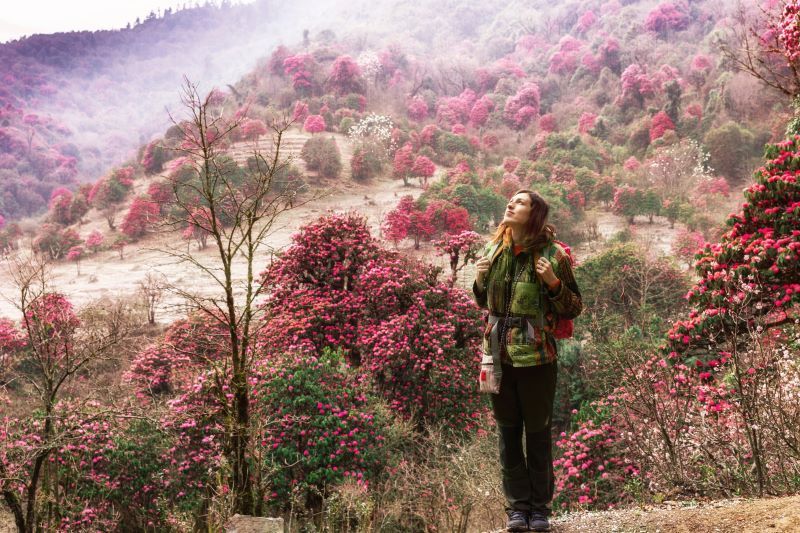
Spring transforms Nepal’s hills into a riot of color.
As winter recedes, rhododendron forests burst into red, pink, and white blooms across mid-elevation trails. This is a close second to autumn for trekking, trading autumn’s crystalline clarity for warmer days, longer daylight, and spectacular floral displays.
Why Spring Shines
- Warmer Days — Comfortable temperatures make higher passes more manageable without deep cold
- Longer Daylight — Extended daylight hours (especially in April) give flexibility on long trekking days
- Floral Spectacle — Rhododendron forests peak mid-to-late April, creating stunning foreground color against snow-capped peaks
- Mountaineering Energy — Spring is climbing season—sharing trails with expedition teams heading to Everest or Manaslu Base Camp
Month-by-Month Breakdown
March
Bridges winter and spring. Snow becomes less frequent above 3,500m, teahouses reopen, and you’ll enjoy quieter trails with improving conditions. Excellent value month.
April
PRIME SPRINGWarming temperatures, peak rhododendron blooms, and generally stable weather make this ideal for most trekkers. Morning clarity remains excellent; afternoon clouds increase as May approaches.
May
Extends spring trekking with warmer temperatures, but pre-monsoon clouds build. Occasional afternoon showers appear late in the month, particularly at lower elevations. Still fully accessible and enjoyable.
Best Routes: Annapurna Circuit (lower sections), Annapurna Base Camp, Everest Base Camp, Manaslu Circuit, Langtang Valley
Winter (December – February)
Winter rewards the prepared with empty trails and crystalline views.
If you don’t mind cold and can handle sub-zero nights, this is Nepal’s most underrated trekking season. Snow-draped landscapes and crystal-clear views await those willing to brave the elements.
Winter Realities
- Extreme Cold — Nighttime temperatures at high camps (above 3,500m) drop to -15°C to -20°C. A four-season sleeping bag and quality down jacket are non-negotiable
- Snow Hazards — Heavy snowfall may close high passes like Larkya La or Thorong La. Always verify pass status before departure
- Limited Operations — Some teahouses at higher altitudes close for winter, particularly in the final weeks of December
- Unbeatable Solitude — January and February see the fewest visitors—you may have entire lodges to yourself
⚠️ Essential Gear: -20°C rated sleeping bag, insulated boots, quality down layers, crampons for high passes. The cold is unforgiving above 4,000m.
Best Winter Routes: Lower-elevation treks like Ghorepani Poon Hill, Kathmandu Valley rim treks, Pokhara-area day hikes
Monsoon (June – August)
The monsoon is Nepal’s least forgiving trekking season—but not without possibilities.
Daily downpours turn trails muddy and slippery. Mountain panoramas disappear behind thick cloud cover. Yet for experienced trekkers with flexible itineraries, the monsoon offers lush, green hills and a mystical atmosphere found nowhere else.
What to Expect
- Heavy Rainfall — Daily downpours turn trails muddy and slippery; leeches appear on lower-elevation forest sections
- Cloud Obscured Views — Mountain panoramas disappear behind thick cloud cover for days at a time
- Landslide Risk — Steep trail sections become hazardous, particularly on road-adjacent portions
- Logistical Disruptions — Domestic flights to mountain airstrips face frequent cancellations
🌵 The Monsoon Exception: Rain-Shadow Treks
Not all of Nepal gets drenched. The rain-shadow regions north of the Himalayas—Upper Mustang and Dolpo—remain remarkably dry during monsoon months. These high-altitude desert landscapes offer a unique off-season alternative when properly planned.
Best Monsoon Options: Upper Mustang Trek, Dolpo Treks (requires permits well in advance due to annual quotas)
Choose Your Season: Match Your Priorities
Route-Specific Timing Recommendations
Manaslu Circuit
Best: Autumn (Sept–Nov) for stable weather and safe Larkya La crossing
Runner-up: Spring (Mar–May) for blooming forests and mountaineering atmosphere
Avoid: Winter (pass may close) and Monsoon (landslide risk, leeches)
Everest Base Camp
Best: Autumn (Oct–Nov) for clearest views; Spring (Apr–May) for expedition energy
Note: Spring lodges fill fastest due to climbing season—book early
Annapurna Circuit
Best: Autumn (Oct–Nov) for Thorong La safety; Spring (Apr) for rhododendrons
Caution: Spring snow may linger on Thorong La in early April
Annapurna Base Camp
Best: Autumn (Oct–Nov) for visibility; Spring (Apr) for warmer days and blooms
Practical Planning Tips for 2026
📅 Book Early for Peak Season
For October 2026 departures, reserve guides, permits, and teahouse space 3–6 months in advance. Flight seats to Lukla and Jomsom are limited and sell out quickly.
📋 Permit Quotas
Restricted areas like Upper Mustang and Manaslu have annual permit quotas. If these are on your list, earlier booking is essential.
🧥 Gear Up for Winter
If choosing winter, invest in a -20°C rated sleeping bag, insulated boots, and quality down layers. The cold is unforgiving above 4,000m.
⏱️ Build in Contingency Days
Weather delays happen even in autumn. A buffer day or two prevents a single storm from derailing your itinerary or forcing dangerous pass crossings.
Final Verdict
For most trekkers, autumn (September–November) is the best time to trek in Nepal, with October standing as the single peak month for weather, visibility, and trail conditions.
Spring (March–May) runs a close second, trading autumn’s crystalline clarity for warmer days, longer daylight, and spectacular rhododendron blooms.
Winter and monsoon suit specific goals—solitude and budget in winter; rain-shadow exploration in monsoon—but require more experience, preparation, and flexibility.
The “best” time ultimately depends on what you value most: perfect conditions, empty trails, vibrant landscapes, or cultural immersion. Match your priorities to the season, prepare accordingly, and Nepal’s Himalayas will deliver an experience that stays with you for a lifetime.
Ready to Plan Your Trek?
Start Planning Your Nepal Adventure
Get personalized advice from experienced guides or browse trekking Guide directory.